Arulmigu Arunchaleswarar Temple
Arunachalesvara Temple, Arunachalam
Tiruvannamalai, Tamil Nadu, India

 Nearby Airport: Salem (SXV), Madras (MAA), Bengaluru (BLR)
 Nearby Railway Station: Tiruvannamalai, Katpadi
 Nearby Bus Station:
Tiruvannamalai
Nearby Bus Station:
Tiruvannamalai
Description:
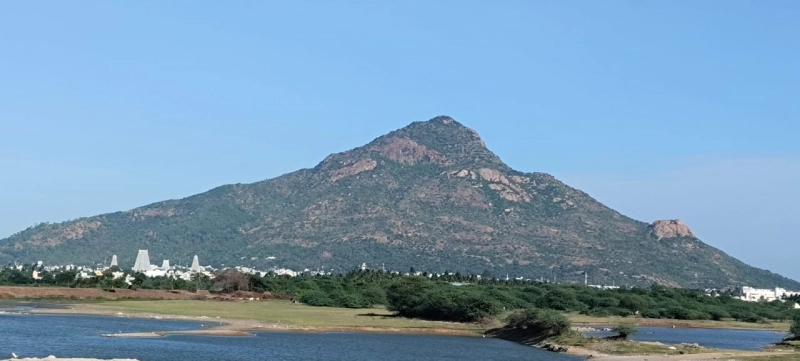
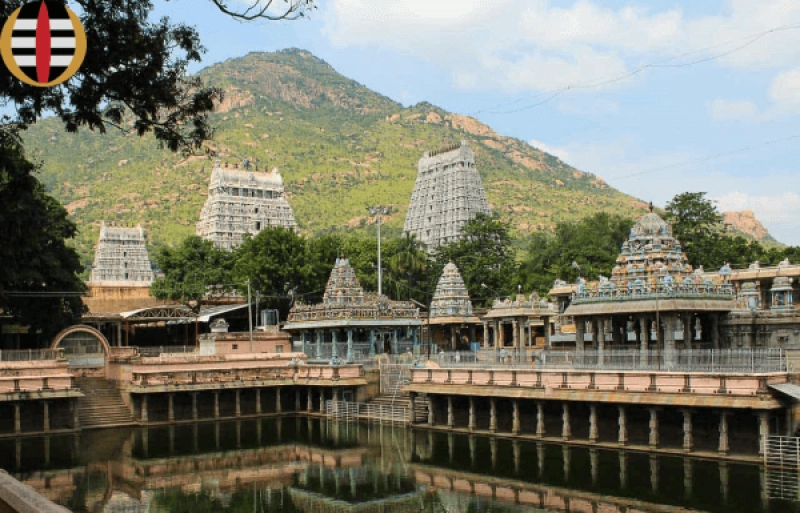
Arulmigu Arunachaleswarar Temple, also known as Annamalaiyar Temple, stands at the foot of the sacred Arunachala hill in Tiruvannamalai, Tamil Nadu. One of the most venerated shrines in the Shaiva tradition, it is designated the Agni (fire) Stalam among the five Pancha Bhoota Sthalams — temples where Lord Shiva manifests as the five cosmic elements of earth, water, fire, air, and sky. Here, Shiva is worshipped as Arunachaleswarar (or Annamalaiyar), embodied in a self-manifest Agni Lingam, and his consort Parvati as Unnamalai Amman.
The name Annamalai derives from the Tamil words meaning "the hill that cannot be approached or measured," echoing the ancient legend in which Shiva manifested as an infinite column of blazing fire — a jyotirlinga — to resolve a cosmic dispute between Brahma and Vishnu, neither of whom could find its beginning or end. The hill of Arunachala is itself regarded as a physical form of Shiva's fire manifestation, making the entire hill a living deity.
Spanning 25 acres (approximately 10 hectares), the temple complex is among the largest in India. Its defining landmark is the Rajagopuram — the eastern gateway tower — which soars to 66 metres (217 feet) across 11 storeys, making it one of the tallest temple towers in Tamil Nadu. The complex comprises seven prakaras (concentric enclosures), nine gopurams, a magnificent Thousand-Pillared Hall from the Vijayanagara period, sacred tanks including the Brahma Theertham, and the subterranean Pathala Lingam shrine.
The temple's origins are traced to the Pallava and early Chola periods, with major construction spanning the 9th through 16th centuries under the Chola, Hoysala, and Vijayanagara dynasties. The great sage Ramana Maharshi arrived here in 1896 and spent the remaining 54 years of his life in the presence of Arunachala, bringing worldwide attention to this timeless sacred site.