Meenakshi Amman Temple
Meenakshi Sundareswarar Temple, Madurai
Madurai, Tamil Nadu, India

 Nearby Airport: Madurai (IXM)
 Nearby Railway Station: Madurai Jn
 Nearby Bus Station:
Madurai
Nearby Bus Station:
Madurai
Description:
Introduction
Meenakshi Amman Temple, officially known as Arulmigu Meenakshi Sundareswarar Temple, is the spiritual heart of Madurai in Tamil Nadu. Located on the southern bank of the Vaigai River, this great temple is dedicated to Goddess Meenakshi, a form of Parvati, and Lord Sundareswarar, a form of Shiva.
The temple is one of the most celebrated living temples of South India. Its towering gopurams, sacred tank, sculpted mandapas, daily rituals, and grand festivals make it both a major pilgrimage centre and an extraordinary monument of Tamil culture.
Sacred Significance
Unlike many Shiva temples where Shiva is the primary focus, Madurai's sacred identity is centred strongly on Goddess Meenakshi. She is worshipped not only as the divine consort of Sundareswarar but also as the royal guardian and mother of Madurai. Her name is often interpreted as “the fish-eyed goddess,” symbolising grace, watchfulness, and maternal protection.
The temple celebrates the divine union of Shakti and Shiva. Devotees seek blessings for marriage, family harmony, courage, prosperity, education, and spiritual wellbeing. For many pilgrims, darshan of Meenakshi Amman followed by Sundareswarar is an essential part of the Madurai pilgrimage.
History
Madurai is an ancient temple city praised in Tamil literary traditions. References to the sacred city and its deities appear in early Tamil devotional literature, while the present temple complex reflects many centuries of patronage, rebuilding, and expansion.
The temple received major contributions from the Pandya rulers and was later restored and expanded under the Vijayanagara and Madurai Nayak periods. Much of the present grandeur, including the vast mandapas, gopurams, and sculptural programme, is associated with the Nayak era, especially the 16th and 17th centuries.
Architecture and Temple Layout
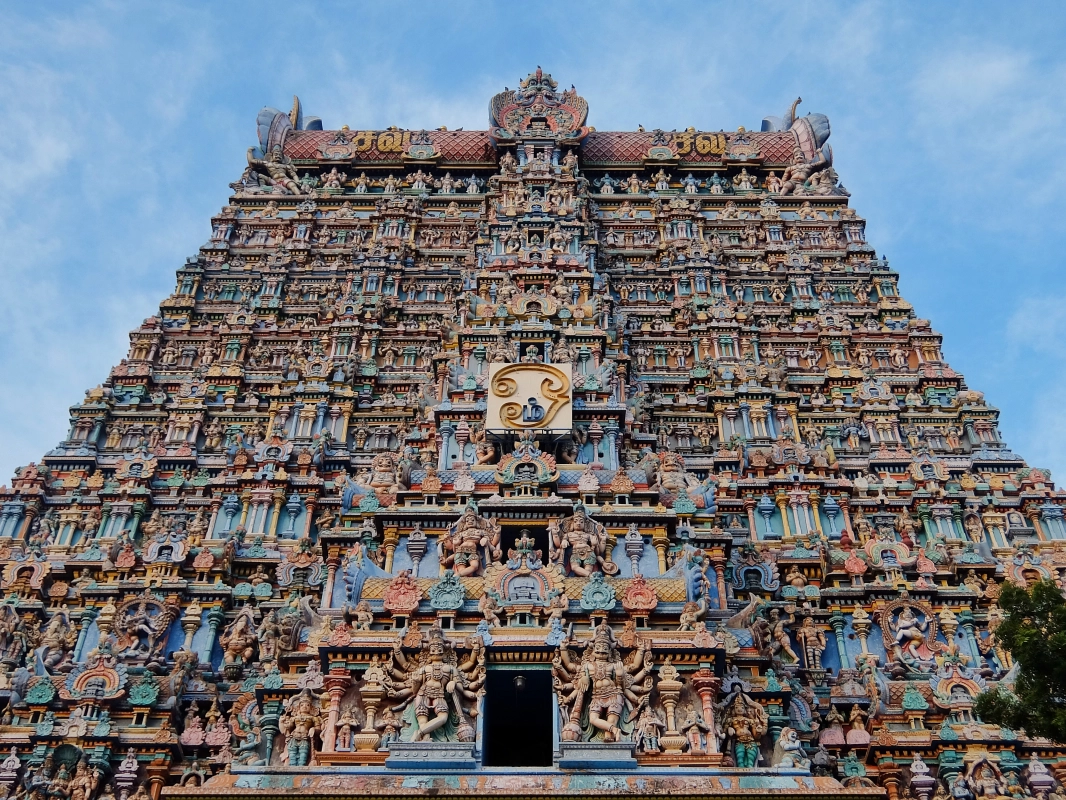
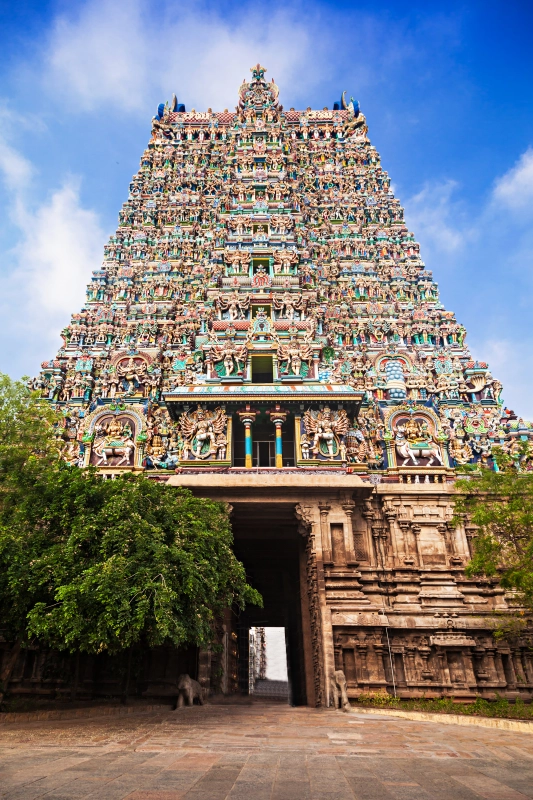
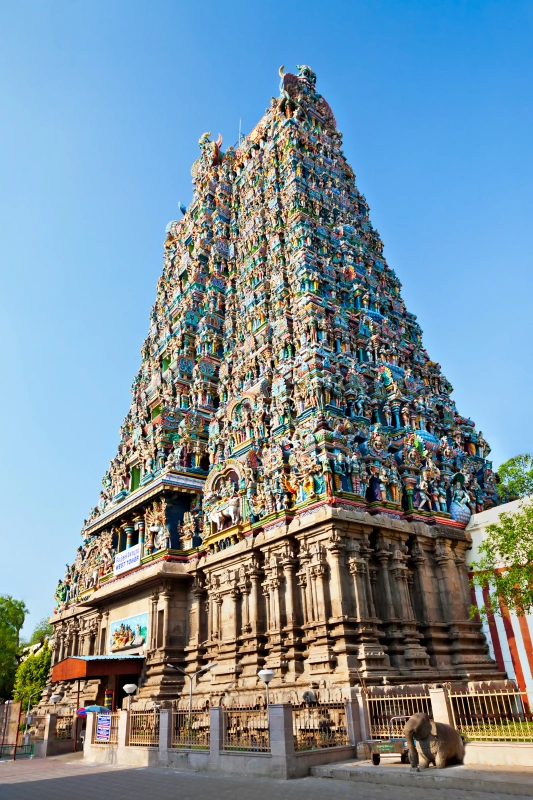
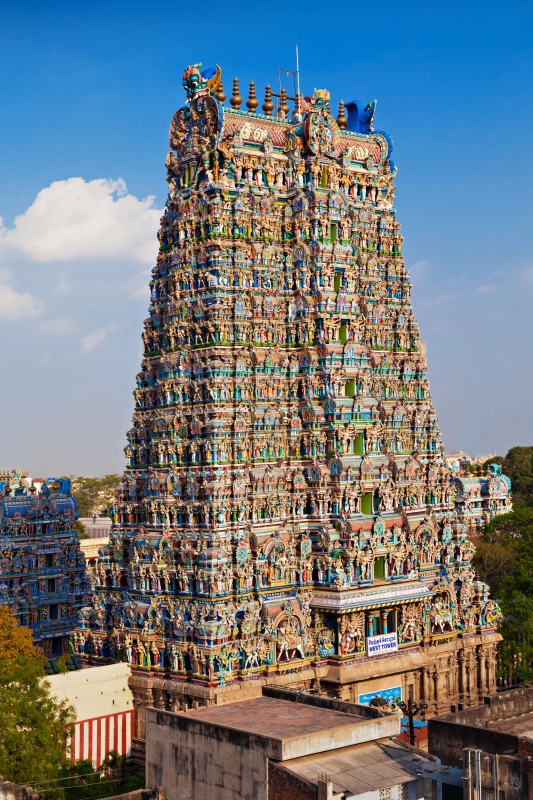
The temple complex is a masterpiece of Tamil Dravidian architecture. It is enclosed within high walls and marked by magnificent gopurams covered with colourful stucco images of gods, goddesses, guardians, saints, and mythological scenes. The temple and the city of Madurai developed together, with streets arranged around the temple in a sacred urban pattern.
- Gopurams: The temple is famous for its many gateway towers, with the southern gopuram being the tallest and most prominent.
- Sanctums: The main shrines of Meenakshi Amman and Sundareswarar are located at the sacred centre of the complex.
- Potramarai Kulam: The Golden Lotus Tank is a sacred temple tank associated with purity, learning, and temple legend.
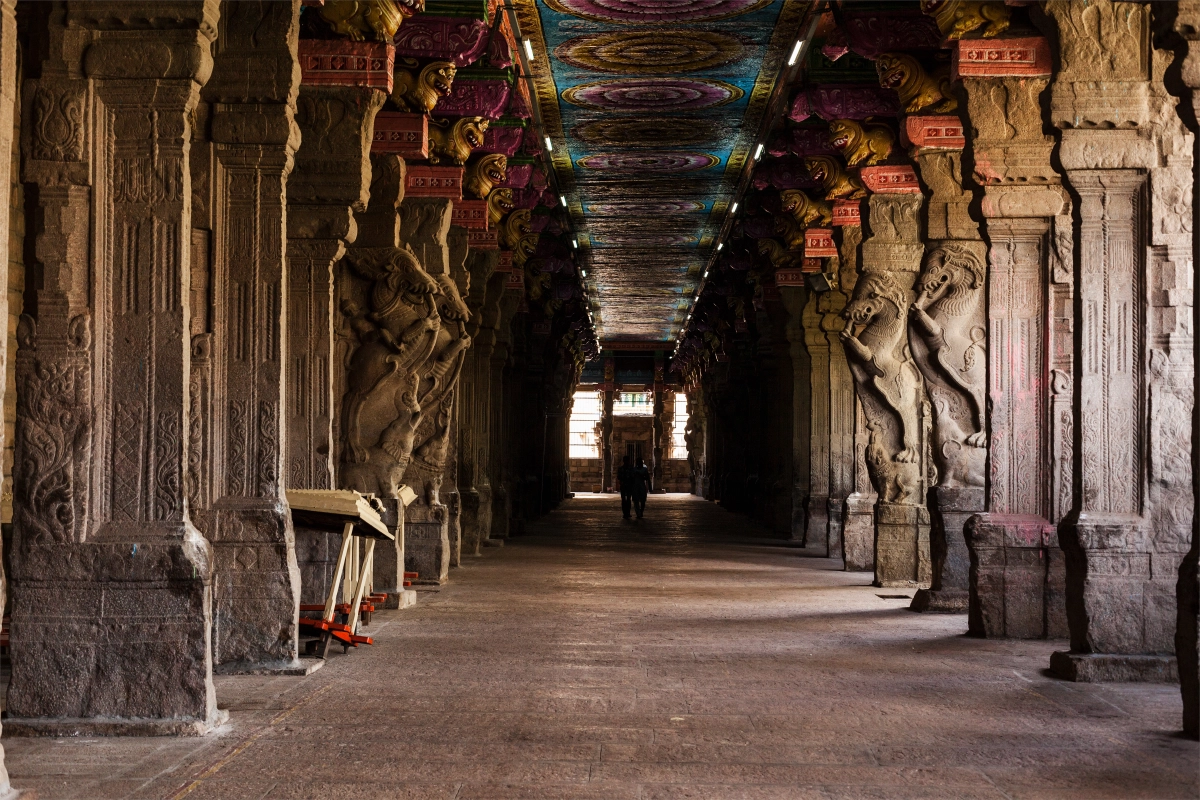
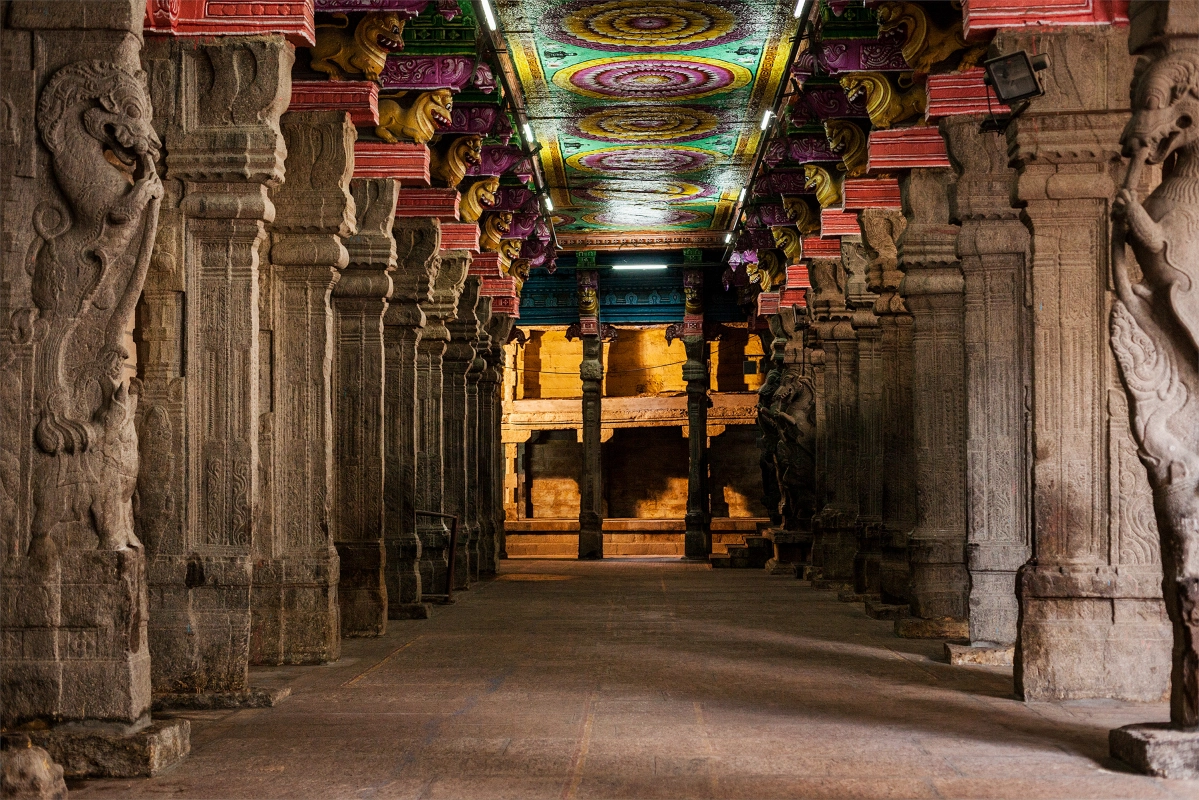
- Thousand Pillar Hall: The sculpted hall is renowned for its artistry, symmetry, and stone workmanship.
- Mandapas: The temple includes many pillared halls used for rituals, gatherings, processions, and festival preparations.
Daily Worship
Meenakshi Amman Temple is an active house of worship where pujas are performed daily for both Goddess Meenakshi and Lord Sundareswarar. Rituals include abhishekam, alankaram, naivedyam, and deepa aradanai. The temple is especially known for the nightly ceremony in which Sundareswarar is ceremonially taken to Meenakshi's chamber, symbolising the divine couple's union.
Because this is a highly visited temple, devotees should check current darshan arrangements, queue systems, special entry options, and festival schedules through official temple channels before visiting.
Festivals
The temple celebrates festivals throughout the Tamil calendar, but the grandest is the Chithirai Festival, centred on the divine marriage of Meenakshi and Sundareswarar. This festival draws enormous crowds and transforms Madurai into a city of processions, music, devotion, and celebration.
- Meenakshi Thirukalyanam: The celestial wedding of Goddess Meenakshi and Lord Sundareswarar, the highlight of Chithirai festival.
- Ther Thiruvizha: The chariot festival, when the deities are taken through the streets in grand temple cars.
- Theppotsavam: The float festival connected with temple ritual tradition.
- Navaratri: Special worship of the Divine Mother over nine nights.
- Maha Shivaratri: Night-long Shiva worship for Lord Sundareswarar.
How to Reach
The temple is located in the heart of Madurai, Tamil Nadu, close to the old city streets and major transport points.
- By Train: Madurai Junction is the nearest major railway station and is well connected with Chennai, Bengaluru, Coimbatore, Tiruchirappalli, Rameswaram, and other cities.
- By Air: Madurai Airport is the nearest airport, with road access to the temple area.
- By Road: Madurai is connected by national and state highways, with buses and taxis available from many Tamil Nadu towns.
Visitor Information
- Best Time to Visit: Early mornings and evenings are devotional times; Chithirai festival is spiritually powerful but very crowded.
- Dress Code: Modest traditional clothing is recommended; follow temple rules for entry into sacred areas.
- Photography: Photography restrictions may apply inside the temple; follow official instructions.
- Nearby Places: Thirumalai Nayakkar Mahal, Koodal Azhagar Temple, Alagar Kovil, Pazhamudircholai, and the Vaigai river area can be visited along with the temple.
- Temple Timings: Timings can change on festival days, so check the official temple website before planning darshan.