Virupaksha Temple
Virupaksha Temple, Hampi
Hampi, Karnataka, India

 Nearby Airport: Kempegowda International Airport Bengaluru
 Nearby Railway Station: Hospet Junction
 Nearby Bus Station:
Hampi or Vijayanagara
Nearby Bus Station:
Hampi or Vijayanagara
Description:
Overview
The Virupaksha Temple at Hampi is one of the oldest functioning temples in India, dedicated to Lord Virupaksha — a form of Lord Shiva — and his consort Goddess Pampa. Situated on the southern banks of the Tungabhadra River in Hampi, Karnataka, this magnificent temple has been in continuous worship for over a thousand years, surviving the rise and fall of the mighty Vijayanagara Empire. It stands today as a UNESCO World Heritage Site and remains the spiritual heart of Hampi, drawing thousands of pilgrims and history lovers from across the world every year.
History
The origins of the Virupaksha Temple date back to the 7th century CE, when early shrines were constructed on this sacred site by local rulers. However, it was during the Vijayanagara Empire (14th–16th centuries) that the temple reached its grandest form. King Deva Raya II and later King Krishnadevaraya — the most celebrated ruler of Vijayanagara — made significant contributions to its construction and expansion.
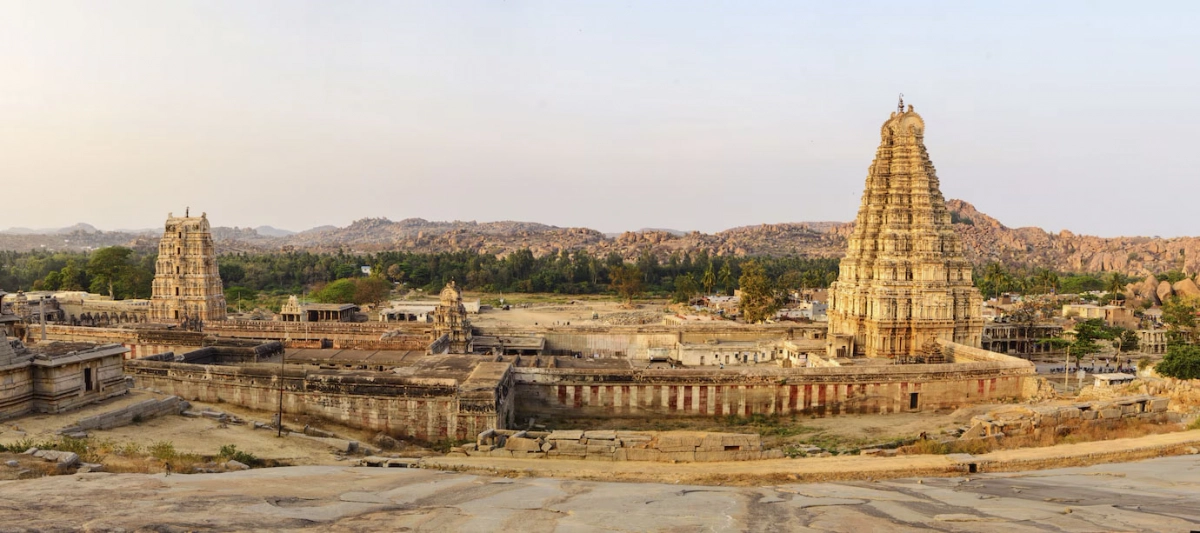
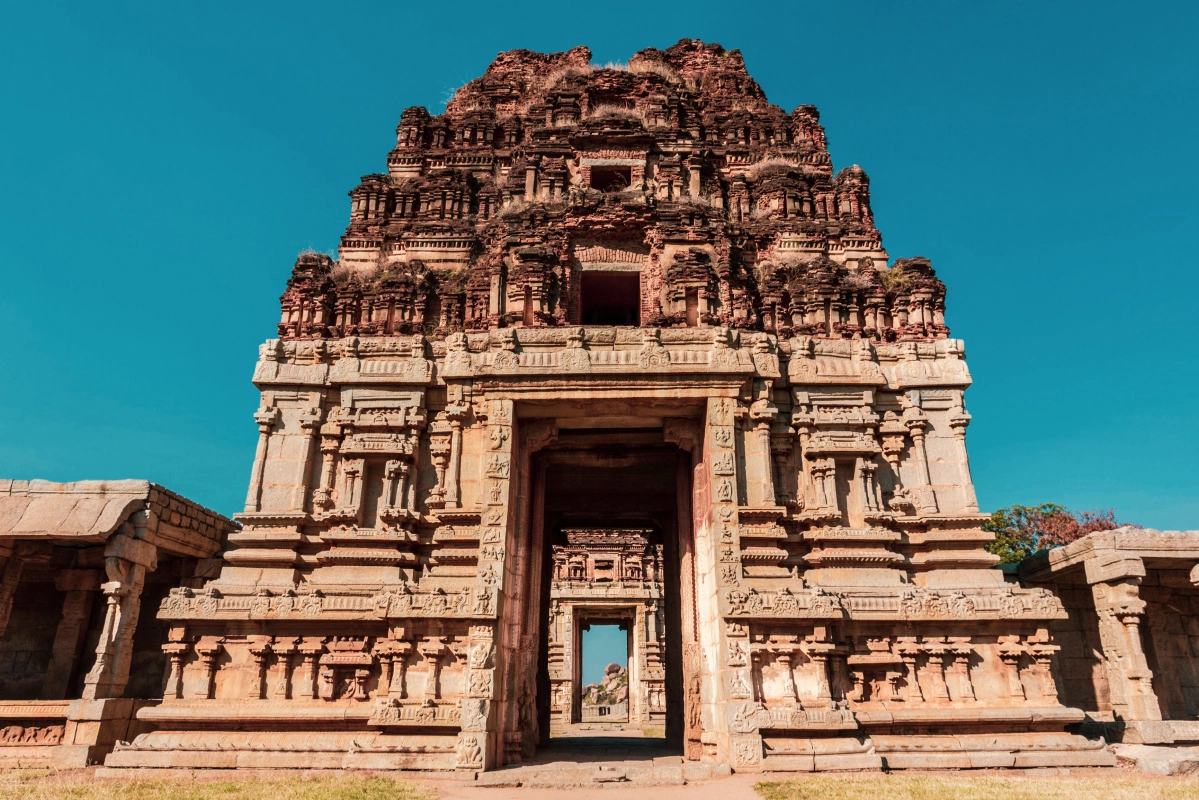
King Krishnadevaraya built the magnificent eastern gopuram (gateway tower) in 1510 CE to commemorate his coronation, and it remains the tallest structure in the temple complex at approximately 50 metres. The temple was the royal state temple of the Vijayanagara kings, and its presiding deity Virupaksha was considered the guardian of the empire itself. Even after the devastating fall of the Vijayanagara Empire in 1565 CE following the Battle of Talikota, the temple continued to be actively worshipped without interruption — a testament to its deep spiritual significance.
Architecture
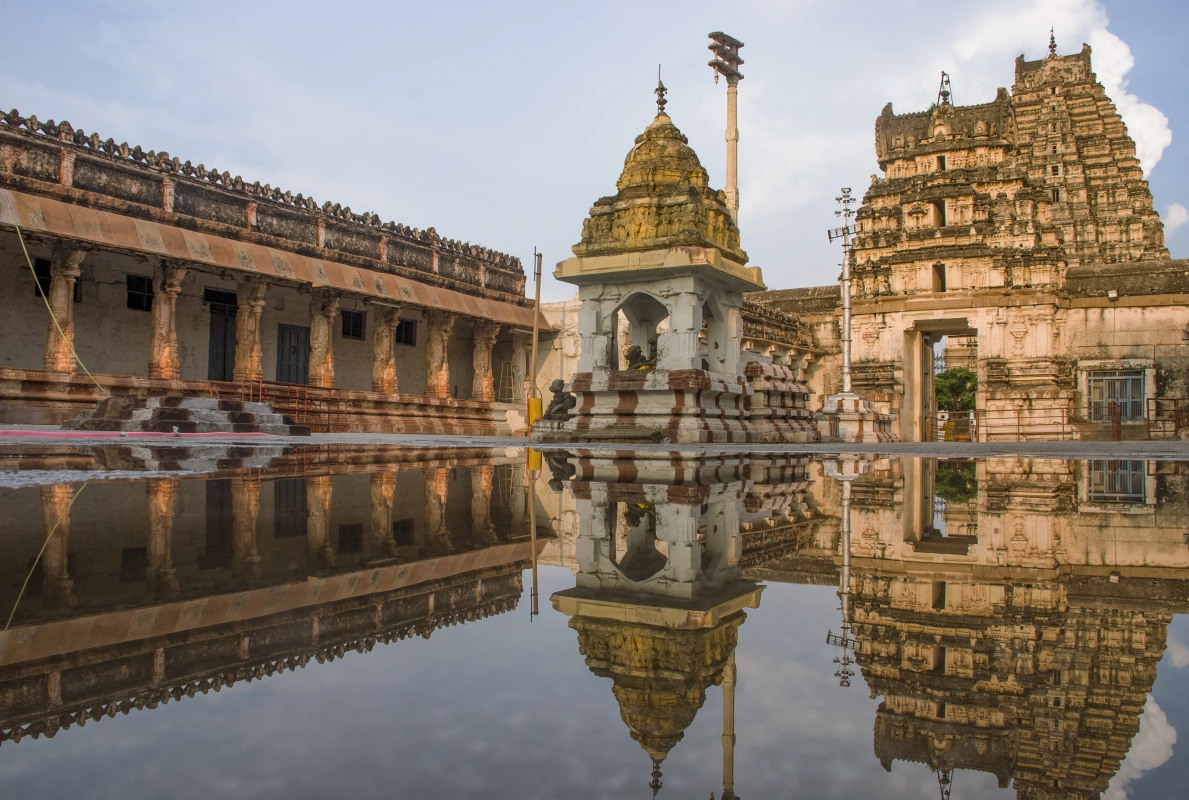
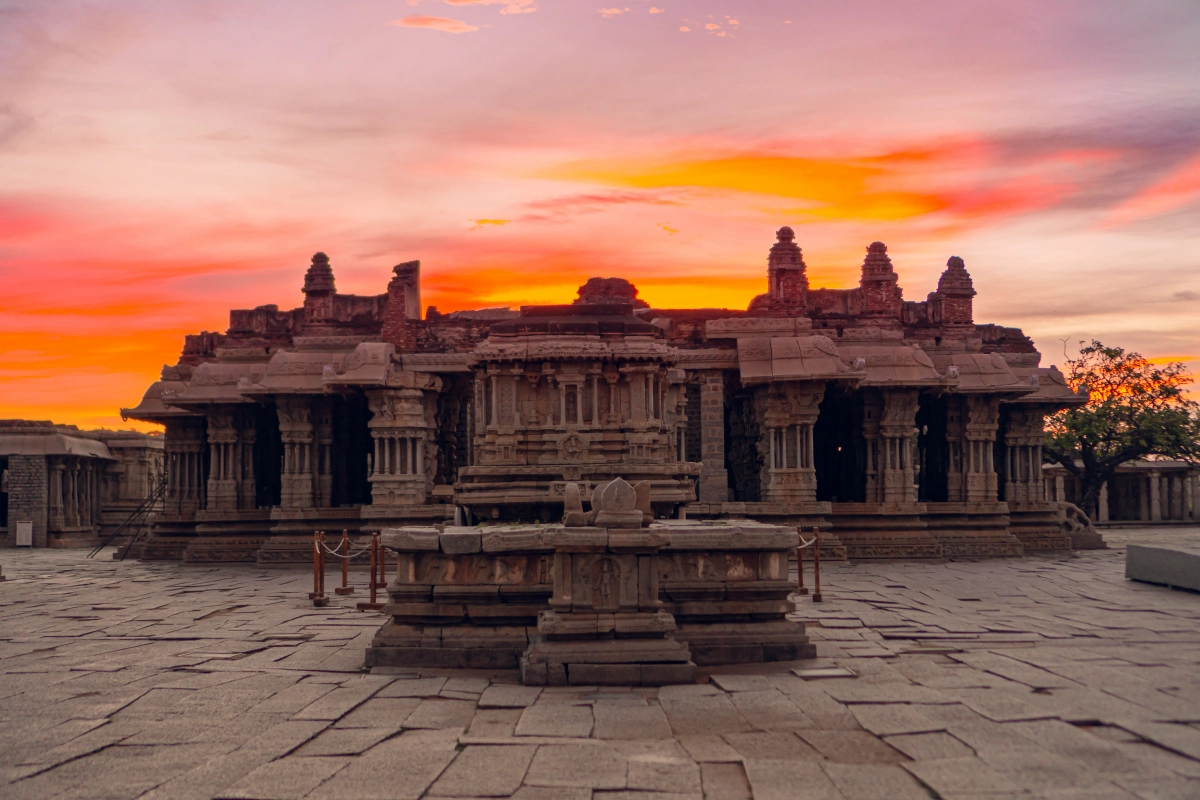
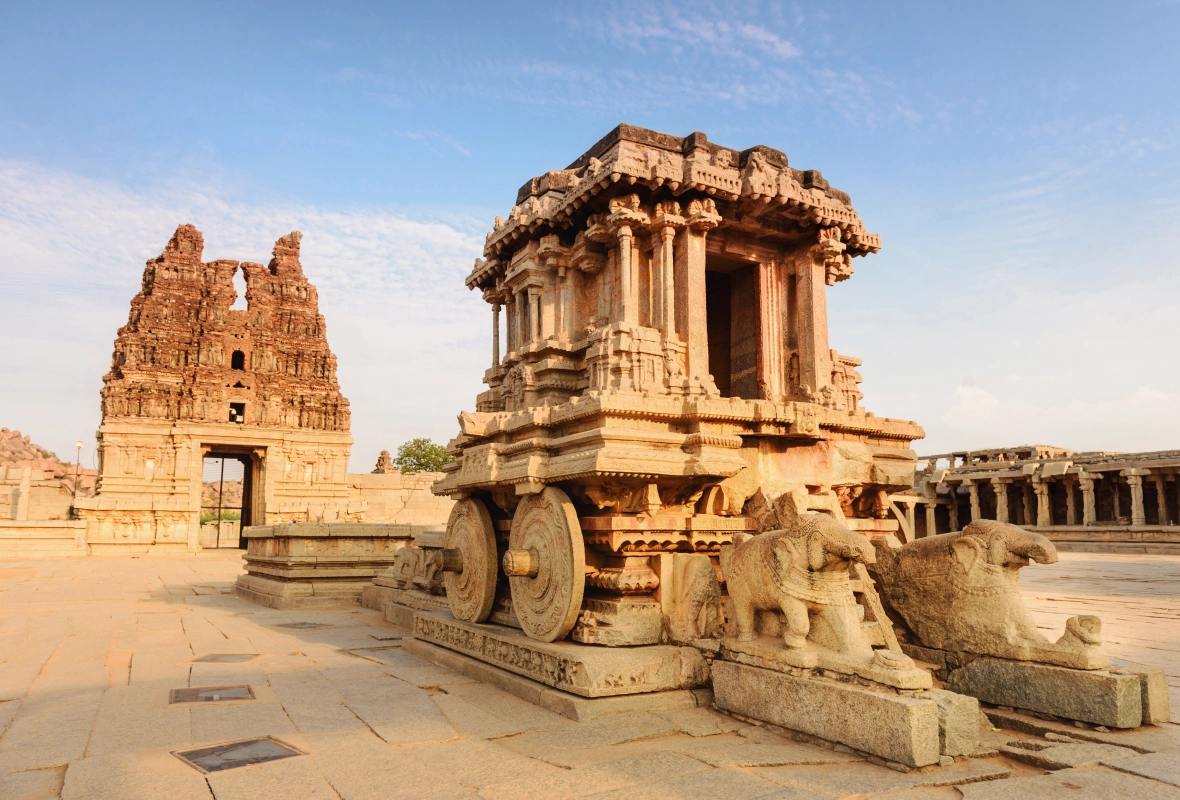
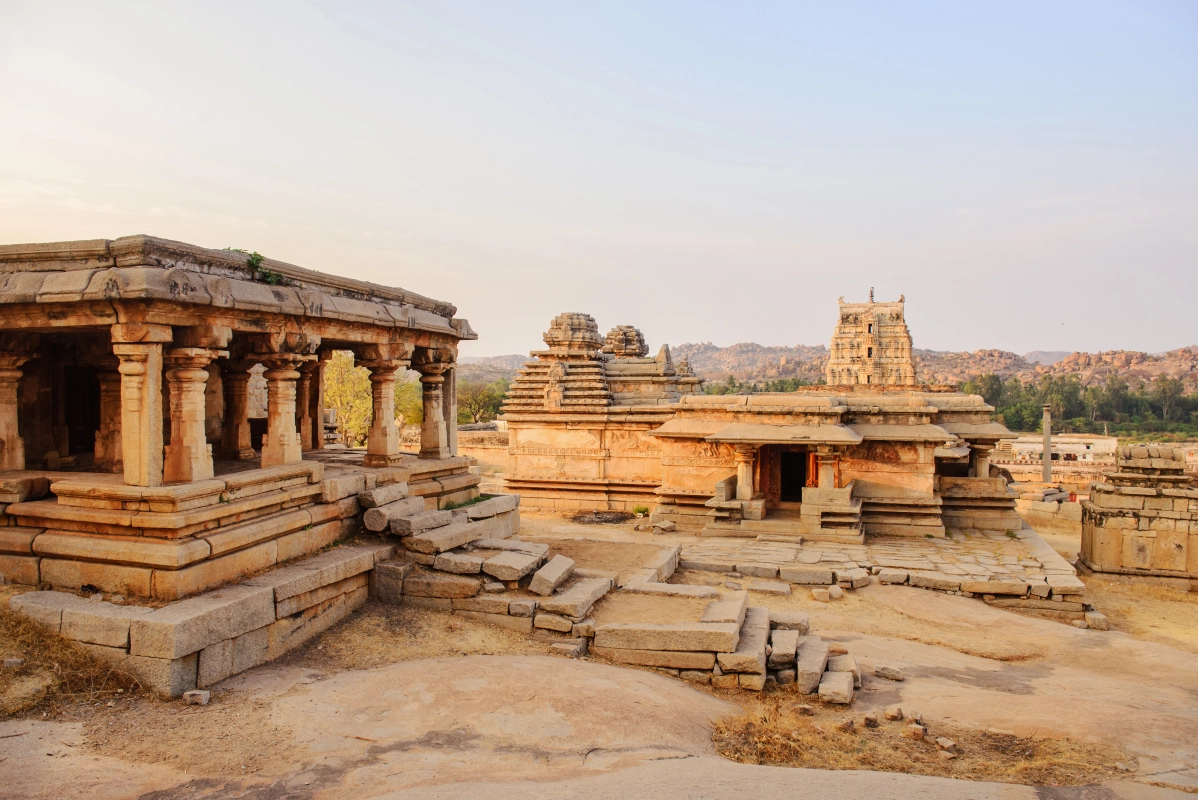
The Virupaksha Temple is a stunning example of Dravidian architecture, a style characterised by pyramid-shaped towers (gopurams), ornate pillared halls (mandapams), and elaborately carved stone sculptures covering every surface.
The temple complex is entered through the grand eastern gopuram, a towering 9-storeyed structure rising 50 metres into the sky, adorned with brightly painted stucco figures of gods, goddesses, celestial beings, and mythological scenes. A smaller northern gopuram provides a secondary entrance and is equally impressive in its decorative detail.
Inside the complex, the inner sanctum (garbhagriha) houses the swayambhu (self-manifested) Shivalinga of Lord Virupaksha. Surrounding it are several pillared halls including the Ranga Mantapa, with intricately carved columns depicting scenes from Hindu epics. The Pampa Devi shrine within the complex is dedicated to the goddess who, according to legend, performed penance on the banks of the Tungabhadra to win Lord Shiva as her husband — this sacred love story is the very founding myth of Hampi itself.
One of the most unusual and beloved features of the temple is its pinhole camera effect — on sunny days, an inverted image of the eastern gopuram is naturally projected onto the wall of a dark inner chamber through a small opening, a phenomenon that continues to fascinate visitors and scientists alike.
The Tungabhadra River flowing at the foot of the Hemakuta Hill adds to the sacred landscape, and pilgrims traditionally take a ritual dip in its waters before entering the temple.
Religious Significance
Lord Virupaksha, the presiding deity, is one of the names of Lord Shiva meaning "the one with odd eyes" or "the lord who sees all." He is worshipped here alongside Goddess Pampa (after whom the city of Pampa — now Hampi — is named) and Goddess Bhuvaneshvari. The temple is an important Shaivite pilgrimage centre and is also significant in the Vaishnava tradition, as it sits within the broader sacred landscape of Hampi associated with the Ramayana — the region is believed to be the ancient Kishkindha, the kingdom of Sugriva mentioned in the Ramayana.
Major festivals celebrated here include Shivaratri, the annual chariot festival (Rathotsava), and the marriage anniversary of Virupaksha and Pampa, all of which draw enormous crowds of devotees.
The Temple Elephant — Lakshmi
No visit to the Virupaksha Temple is complete without meeting Lakshmi, the temple elephant. Lakshmi is an integral part of daily rituals and is known for her gentle nature and intelligence. She participates in temple processions and blesses devotees by placing her trunk on their heads — a beloved tradition that visitors and pilgrims cherish deeply.