Who is Goddess Durga Matha?
Goddess Durga Matha is the supreme warrior form of the Divine Mother, worshipped as the protector of dharma, destroyer of evil and compassionate refuge of devotees. She is adored as Adi Shakti, the primal cosmic energy, and also as a powerful manifestation of Parvathi Devi. In many traditions, Durga is the Mother who appears when ordinary strength is not enough and the universe needs the combined force of all divine powers.
Durga Matha is not limited to one region or one temple. She is worshipped across India and the world as Mahadevi, Ambika, Chandika, Bhavani, Jagadamba, Mahishasura Mardini and many other sacred names. Her worship brings together courage, wisdom, discipline, compassion and victory over inner and outer darkness.
Meaning of the Name Durga
The word Durga is often understood as “the one who is difficult to approach by evil” and “the one who helps devotees cross difficulties.” The name also suggests a protective fortress, showing that the Divine Mother becomes a shield around those who surrender with faith.
- Durga: the invincible Mother who removes hardship and protects dharma.
- Matha: Mother, the loving source of protection, nourishment and grace.
- Mahishasura Mardini: the slayer of Mahishasura, symbolizing victory over arrogance and ignorance.
- Chandika: the fierce form who destroys adharma without hesitation.
Origin and Manifestation
The most celebrated account of Durga’s manifestation appears in the Devi Mahatmyam, also known as the Durga Saptashati or Chandi Patha. When Mahishasura, the buffalo demon, defeated the devas and disturbed cosmic order, the gods realized that no single deity could overcome him. From the anger, light and power of Brahma, Vishnu, Shiva, Indra and other devas emerged a brilliant feminine radiance. These energies united into one supreme form: Goddess Durga.
Each deity offered a weapon and blessing to the newly manifested Mother. Shiva gave the trident, Vishnu gave the discus, Varuna gave the conch, Agni gave the spear, Vayu gave the bow and arrows, Indra gave the thunderbolt and the Himalayas offered the lion as her mount. This shows that Durga is not a separate minor power, but the concentrated Shakti of the divine universe.
Why Durga Matha Appeared
Durga Matha appeared to restore balance when arrogance, violence and adharma became too powerful. Mahishasura represents more than an external demon; he also symbolizes ego, uncontrolled desire, stubborn ignorance and the tendency to misuse strength. Durga’s battle with him teaches that divine wisdom must be joined with courage to defeat destructive forces.
Her manifestation also reveals an important spiritual truth: Shakti is the power through which the divine acts. When the world needs protection, the Mother appears in the form required for that moment: gentle as nourishment, fierce as justice, luminous as knowledge and heroic as Durga.
Major Legends of Durga Matha
The most famous legend is the slaying of Mahishasura. For nine nights and days, Durga battled the asura and his armies. When Mahishasura changed forms, she remained steady, finally defeating him and restoring the authority of dharma. This victory is celebrated during Navaratri and Vijayadashami.
The Devi Mahatmyam also celebrates her as the destroyer of Madhu and Kaitabha, Mahishasura, Dhumralochana, Chanda and Munda, Raktabija, Shumbha and Nishumbha. Each story represents the Mother’s power to remove a different form of negativity: pride, cruelty, blind anger, multiplying desires and spiritual forgetfulness.
Iconography and Symbolism
Durga Matha is usually depicted with many arms, seated or riding on a lion or tiger, holding divine weapons and blessing devotees with calm fearlessness. Her face remains peaceful even in battle, showing that true power is disciplined, dharmic and compassionate.
- Many arms: her ability to protect, guide and act in many ways at once.
- Lion or tiger: courage, sovereignty and mastery over instinctive nature.
- Trident: power over body, mind and spirit, and the destruction of ego.
- Discus: divine order, clarity and the turning wheel of time.
- Conch: sacred sound, awakening and victory of dharma.
- Lotus: purity and spiritual growth even in a difficult world.
- Abhaya mudra: the promise, “Do not fear, I am with you.”
Relationship with Other Deities and Shakti Forms
Durga Matha is widely understood as a form of Adi Shakti, the eternal Divine Mother from whom all goddess forms arise. In Shaiva traditions, she is closely identified with Parvathi Devi, the Shakti of Lord Shiva. In Shakta traditions, she is Mahadevi herself, and Lakshmi, Saraswati, Kali, Lalitha, Bhavani, Annapurna and other forms are honored as her expressions.
Her fierce forms include Kali, Chamunda, Chandika and Bhadrakali. Her nourishing forms include Annapurna and Jagadamba. Her royal and auspicious forms include Lalitha Tripura Sundari, Rajarajeshwari and Bhavani. The Navadurga worshipped during Navaratri are Shailaputri, Brahmacharini, Chandraghanta, Kushmanda, Skandamata, Katyayani, Kalaratri, Mahagauri and Siddhidatri.
Important Temples and Sacred Places
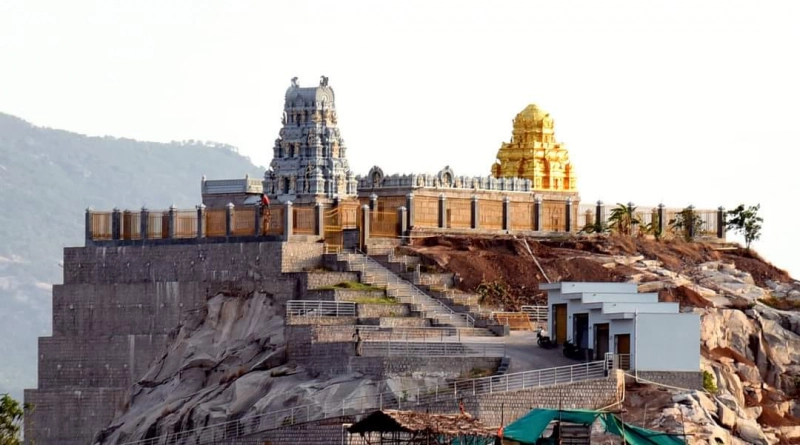
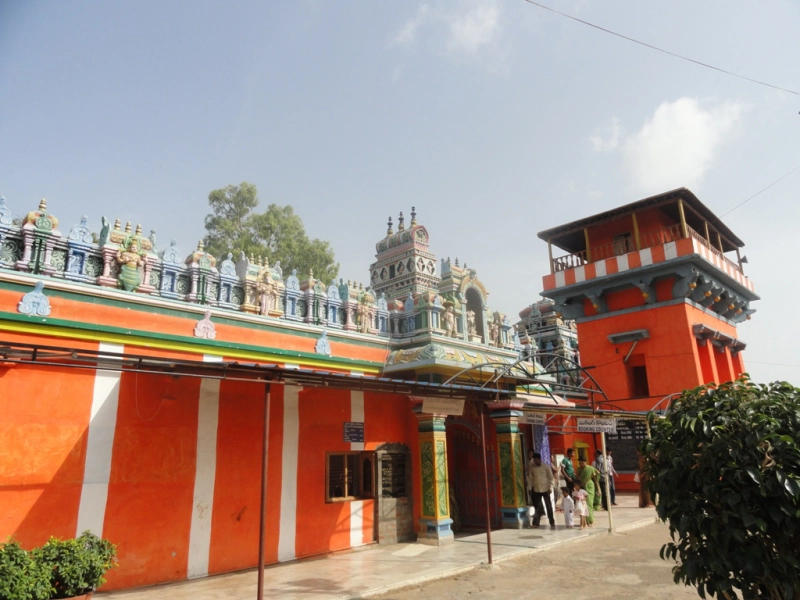
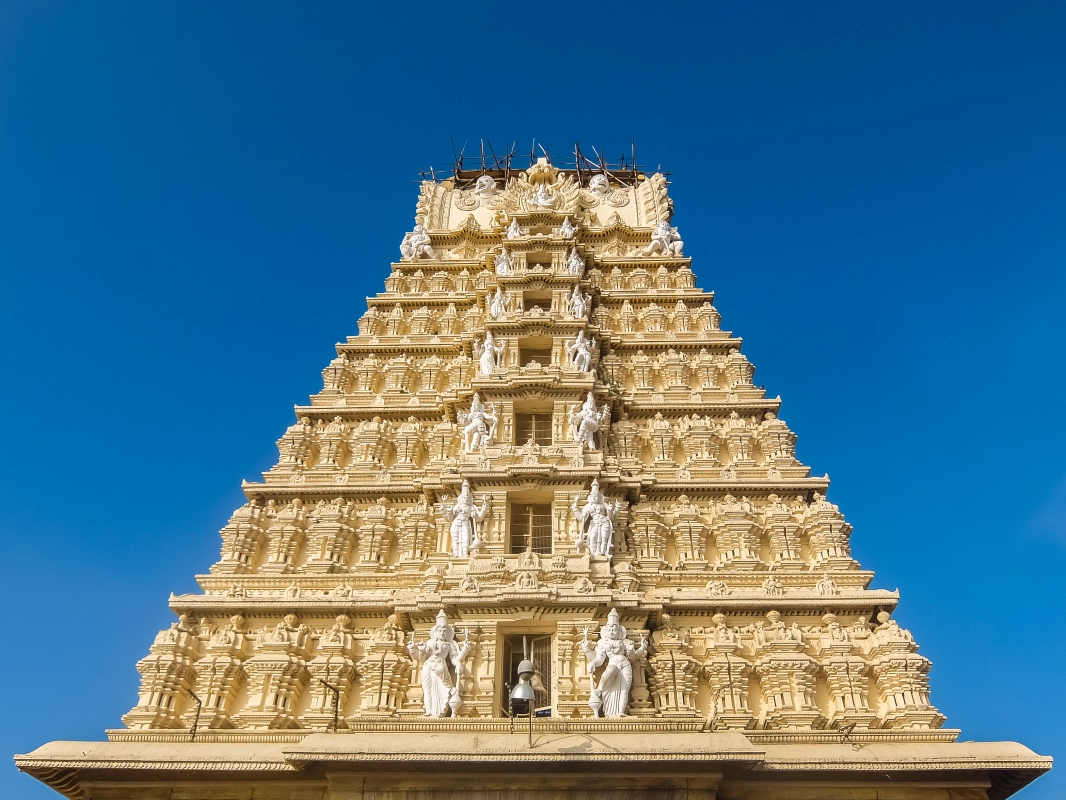
Durga Matha is worshipped in thousands of temples, Shakti Peethas, village shrines and family altars. The following places are among the widely revered Durga, Shakti and Devi kshetras connected with her worship across India and beyond:
- Vaishno Devi Temple, Katra, Jammu and Kashmir
- Kamakhya Temple, Guwahati, Assam
- Dakshineswar Kali Temple, Kolkata, West Bengal
- Kalighat Kali Temple, Kolkata, West Bengal
- Jwala Ji Temple, Himachal Pradesh
- Naina Devi Temple, Himachal Pradesh
- Chintpurni Devi Temple, Himachal Pradesh
- Mansa Devi Temple, Haridwar, Uttarakhand
- Chamunda Devi Temple, Himachal Pradesh
- Vindhyavasini Devi Temple, Vindhyachal, Uttar Pradesh
- Danteshwari Temple, Dantewada, Chhattisgarh
- Maa Bamleshwari Temple, Dongargarh, Chhattisgarh
- Ambaji Temple, Gujarat
- Harsiddhi Mata Temple, Ujjain, Madhya Pradesh
- Mahalakshmi and Bhavani traditions at Kolhapur and Tuljapur, Maharashtra
- Tulja Bhavani Temple, Tuljapur, Maharashtra
- Saptashrungi Devi Temple, Vani, Maharashtra
- Kanaka Durga Temple, Vijayawada, Andhra Pradesh
- Alampur Jogulamba Temple, Telangana
- Ujjaini Mahakali Temple, Secunderabad, Telangana
- Chamundeshwari Temple, Mysuru, Karnataka
- Mookambika Temple, Kollur, Karnataka
- Attukal Bhagavathy Temple, Thiruvananthapuram, Kerala
- Meenakshi Amman Temple, Madurai, Tamil Nadu
- Kamakshi Amman Temple, Kanchipuram, Tamil Nadu
- Mariamman and Bhagavathy temples across Tamil Nadu, Kerala and Sri Lanka
- Durga Puja mandaps and temples in Bengal, Odisha, Tripura, Bangladesh and diaspora communities worldwide
Worship, Festivals, Vrathams and Offerings
Durga Matha is worshipped daily by many devotees, but Navaratri is her most celebrated festival. During the nine nights, devotees honor her as different forms of Shakti, perform kumkum archana, recite Durga Saptashati, chant Lalitha Sahasranama or Devi stotras, observe fasting and offer lamps, flowers, fruits and naivedyam.
- Sharad Navaratri: the major autumn festival ending with Vijayadashami.
- Vasantha Navaratri: spring worship of the Divine Mother.
- Durga Puja: grand worship especially in Bengal, Odisha, Assam, Tripura and global communities.
- Friday worship: many families worship the Mother on Fridays for auspiciousness and protection.
- Kumkum, turmeric and flowers: common offerings symbolizing Shakti, purity and devotion.
- Durga Saptashati parayana: sacred recitation praising the victory of Devi over adharma.
Cultural Significance
Durga Matha is a powerful cultural symbol of courage, motherhood and justice. Durga Puja, Navaratri golu, Bathukamma, Bonalu, Garba, Dandiya and many regional Devi festivals show how her worship adapts to local language, art, music, food and community life while preserving the same spiritual center: the victory of Shakti over darkness.
For many devotees, Durga is the Mother who gives strength before a difficult task, protection during danger, discipline during confusion and gratitude after victory. Her image inspires both devotion and social courage.
Spiritual Message
Durga Matha teaches that divine strength is not harshness; it is fearless compassion guided by dharma. Her battle with Mahishasura reminds devotees to face ego, anger, fear and ignorance within themselves. Her blessing hand reminds us that the Mother’s protection is available to those who live with sincerity, courage and devotion.
Connections
Related Temples
Explore temples →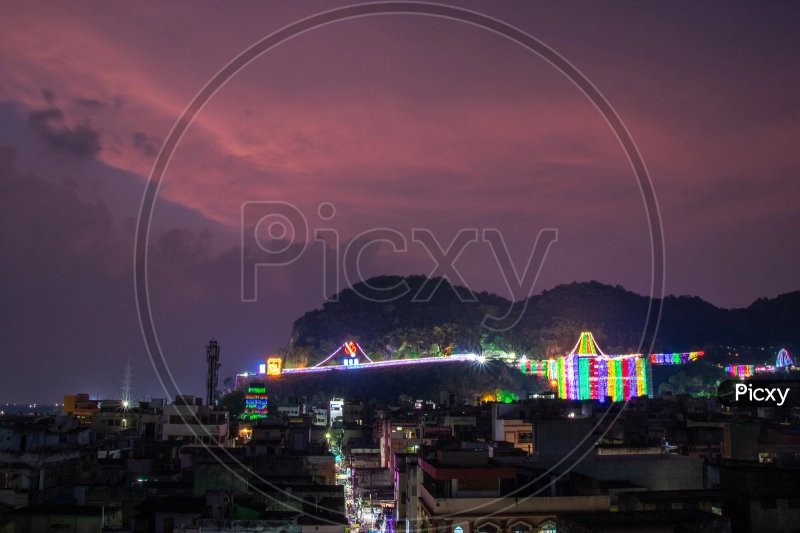

Related Mantras & Slokas
Browse mantras →Continue Exploring
Open related mythology, temple pages, mantras and the interactive connection web.